3–4
Months to new growth
9–12
Months to full density
50–65%
Lower cost than DE/BE
Cosmetic Procedures — Hair
Restore density.
Built to last.
Hair transplantation, for natural density and long-term stability
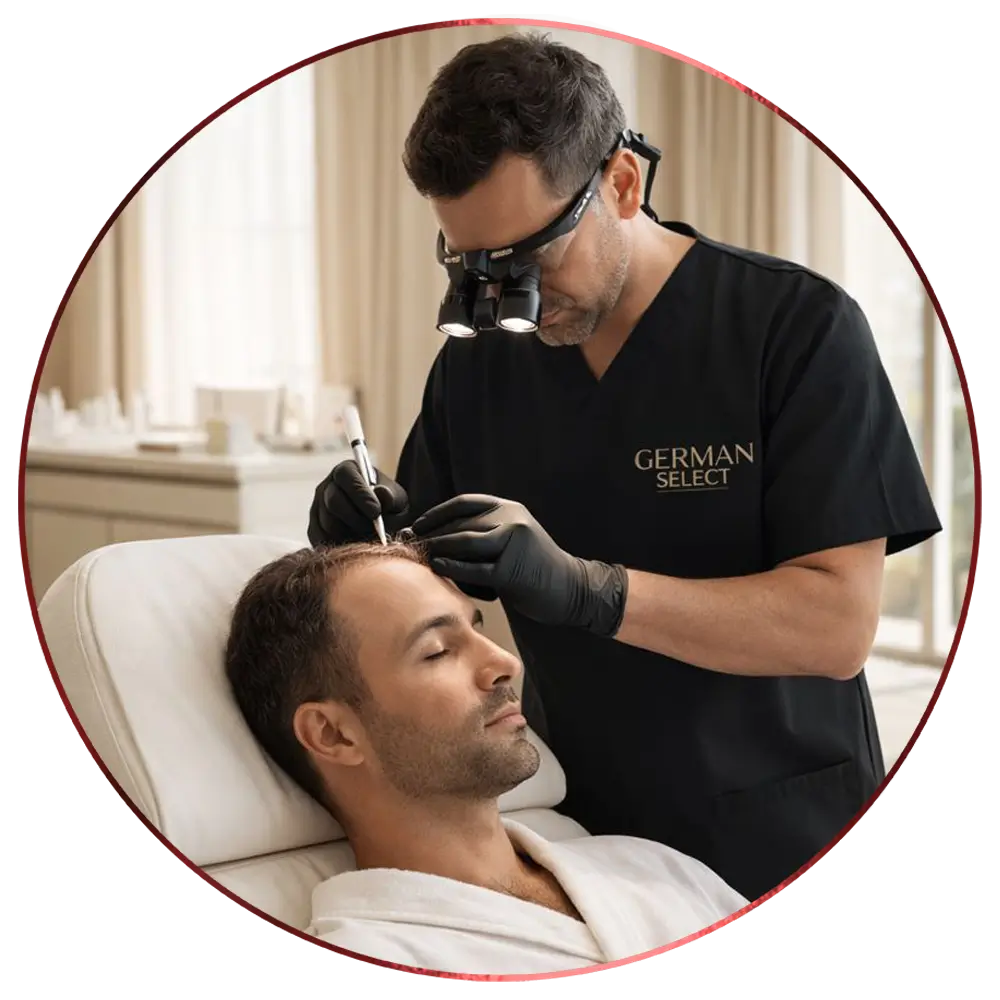
Hair transplantation restores hair growth by repositioning healthy follicles at their structural foundation. Treatment follows European medical standards, with the procedure and recovery managed in Hurghada from a single point of contact.

The concern
When hair loss
becomes progressive.
Hair thinning develops gradually. Genetics, hormonal sensitivity, circulation, and follicle fatigue influence this process. In many patients, hair loss continues even with medication or topical treatments. The follicles stop producing visible hair but remain present beneath the skin.
A hair transplant is considered when recession or thinning progresses despite non surgical options, when reduced density affects facial balance or self perception, when donor hair remains strong and stable, and when expectations focus on restoration rather than perfection. The objective is long term balance rather than short term density.

What it corrects
Restoring coverage where
hair loss follows a pattern.
Hair transplantation restores coverage in areas where hair loss follows a stable and medically predictable pattern. Each zone requires a different strategy to maintain balance as hair loss progresses over time, confirmed during your medical assessment.
Hairline
Frontal hairline recession
Restoring a receded hairline requires careful density and direction planning to maintain a natural appearance as the surrounding hair continues to change.
Scalp
Diffuse thinning on the scalp
General thinning across the scalp is addressed by redistributing density where it has the greatest visual impact on overall coverage.
Crown
Crown or vertex hair loss
The crown area has a distinct growth pattern and is one of the more technically demanding zones to plan for a natural whorl direction.
Pattern
Temporal or pattern-based loss
Temporal recession and broader pattern loss are planned together, since these areas influence how the rest of the hairline is perceived.
The procedure
How hair transplantation
is planned and performed.
01
Medical evaluation
Your hair loss history and expectations are reviewed. Your surgeon determines whether transplantation is medically appropriate and sustainable long-term.
02
Follicle harvesting
Follicles are harvested and prepared under controlled conditions. Only grafts that meet viability criteria are selected for placement.
03
Guided placement
Grafts are placed according to a predefined medical plan. Density, direction and spacing are fixed before placement begins.
What's included
Your complete
hair transplantation program.
Your hair restoration is coordinated from assessment to long-term follow-up. Every plan begins with a detailed medical assessment. Hair characteristics, scalp condition, donor density and medical background are evaluated before any recommendation is made. Hair restoration is planned as a long-term solution; all planning prioritises future stability over immediate visual results.
Medical eligibility screening
Donor area evaluation and planning
Controlled graft extraction and placement
Post-procedure scalp care guidance
Recovery planning during your stay
One point of contact throughout your journey
Digital follow-up after returning home
Ready to explore your options
No commitment required. Your coordinator responds within 24 hours and can answer any questions before you decide.
Questions
What patients
commonly ask.
Am I a candidate for a hair transplant?
Hair transplantation is considered when hair loss follows a stable, medically predictable pattern, donor hair remains strong, and expectations focus on restoring balance rather than achieving maximum density. A medical assessment confirms suitability based on your hair characteristics and scalp condition.
When will new hair start growing after a hair transplant?
Transplanted hair typically sheds within the first few weeks, this is expected and normal. New growth begins around 3–4 months after the procedure, with visible density continuing to improve over 9–12 months.
Will transplanted hair look natural?
Natural results depend on planning density, direction and spacing according to your existing hair pattern and how hair loss is likely to progress. This planning is completed before placement begins, prioritising long-term, natural-looking balance over short-term density.
Is a hair transplant a permanent solution for hair loss?
Transplanted follicles are generally resistant to the hormonal process that causes pattern hair loss and continue producing hair long-term. However, hair loss in untreated areas can continue to progress, which is why treatment is planned with future progression in mind.
How long does recovery take after a hair transplant?
Most patients return to normal daily activity within a few days. The scalp requires gentle aftercare for the first 1–2 weeks. Full healing of the donor and recipient areas takes several weeks, while visible results develop progressively over many months.
Can a hair transplant be combined with other treatments?
Yes. Hair transplantation is often planned alongside non-surgical treatments such as scalp mesotherapy to support donor and recipient area health. Your specialist confirms an appropriate combination during consultation.
Next step
Plan for stability,
not just day one.
Hair transplantation starts with medical assessment and long-term planning. A structured consultation is the starting point, giving you clarity, controlled execution and a plan designed to remain natural as years pass.