Dental care - Veneers
Dental Veneers
in Egypt
The smile you want. Precisely crafted.
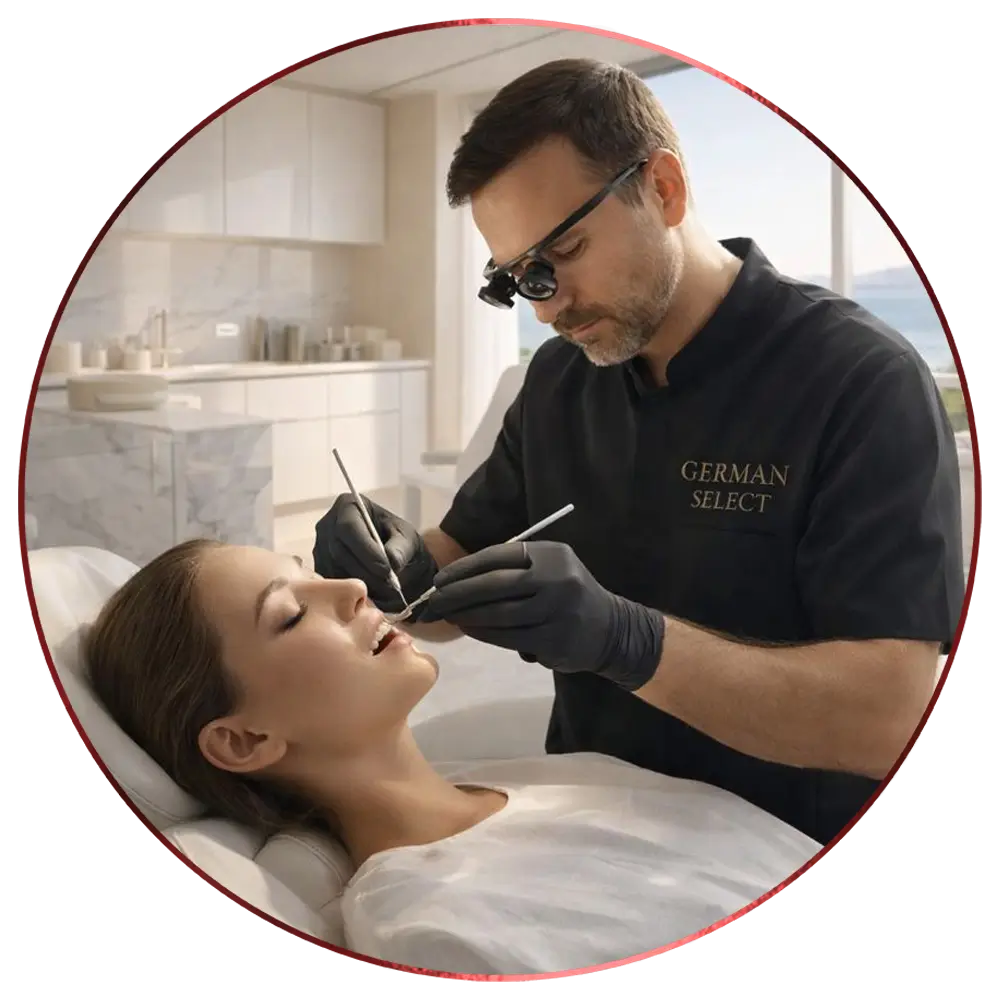
Ultra-thin porcelain shells, custom-made. Veneers are wafer-thin porcelain shells bonded to the front surface of teeth, correcting colour, shape, size and alignment in a single treatment. The result is natural-looking, durable and designed to last.
0.3–0.5 mm
ultra-thin preparation
10–15
Years lifespan
2
Appointments
to completion

What they correct
More than colour,
shape and proportion too.
Veneers address the full visual surface of a tooth in one procedure. Discolouration that does not respond to whitening, from tetracycline staining, fluorosis or trauma, is covered completely. Chipped, worn or short teeth are rebuilt to the correct length and shape.
For mild crowding or spacing, veneers can close gaps and create the appearance of aligned teeth without orthodontic treatment, a significant advantage when timeline matters.
Porcelain vs composite
Two materials.
Different outcomes.
At German Select, porcelain veneers are the standard recommendation. The comparison explains why, and when composite is the right choice.
Porcelain veneers
Fabricated in a dental laboratory. Highly translucent, stain-resistant, and visually indistinguishable from natural enamel. Lasts 10–15 years. Requires minimal tooth preparation.
E-max ceramic
A high-strength lithium disilicate ceramic, the premium choice for superior durability and aesthetics. Recommended for posterior teeth or patients with stronger bite forces.
Composite veneers
Applied chair-side in one visit, no laboratory required. Less expensive and reversible. Prone to staining over time and typically lasts 5–7 years. Best for budget-conscious cases or younger patients.
Lumineer, no-prep option
Ultra-thin veneers requiring no enamel removal. Suitable for specific cases, your specialist confirms suitability. Reversible and conservative.
The process
From consultation
to final smile.
01
Design & planning
Digital smile design maps your facial proportions, lip line and tooth shape. You see the planned result before any preparation begins.
02
Tooth preparation
A minimal layer of enamel (0.3–0.5 mm) is removed from the tooth surface. Impressions taken and temporaries placed while the veneers are laboratory-fabricated, 5–7 days.
03
Bonding
Veneers are tried in dry for fit, shape and colour verification. A dental adhesive bonds each veneer permanently to the prepared tooth surface. Final polish and bite check.
What's included
Your complete
veneer package.
Every veneer treatment includes digital smile design, the preparation appointment, laboratory fabrication, the bonding appointment and a 2-week review.
Digital smile design. Proportions planned to your face
Full shade selection consultation
Tooth preparation under local anaesthesia
Temporary veneers during laboratory phase
Porcelain or E-max veneers, laboratory fabricated
Final bonding, polish and occlusion check
Ready to explore your options
No commitment required. Your coordinator responds within 24 hours and can answer any questions before you decide.
Questions
What patients
commonly ask.
Am I a candidate for dental veneers?
Yes, most patients with healthy enamel and stable gums are suitable candidates for dental veneers.
Veneers require sufficient enamel for reliable bonding. During assessment, tooth structure, bite stability, and gum health are evaluated to confirm long-term suitability.
Is tooth preparation always required for veneers?
No, minimal or no preparation is sometimes possible, depending on tooth position and enamel thickness.
Preparation is only performed when needed to ensure correct alignment, bonding strength, and aesthetic balance. Preservation of enamel is a primary planning principle.
Can dental veneers be combined with other treatments?
Yes, veneers are often combined with whitening, minor orthodontic correction, or gum contouring.
Treatment order is planned carefully to ensure color stability, alignment accuracy, and predictable final results.
Do dental veneers look natural?
Yes, modern ceramic veneers are designed to mimic natural tooth translucency and light reflection.
Shape, color, and surface texture are customized to your facial features and existing teeth. When planned correctly, veneers blend seamlessly without an artificial appearance.
How long do dental veneers last?
Dental veneers typically last 10 to 15 years with proper care.
Longevity depends on material choice, bite forces, oral hygiene, and regular follow-up. Adhering to maintenance guidelines significantly extends functional lifespan.
How do I maintain dental veneers long term?
You maintain veneers through regular oral hygiene and routine dental check-ups.
Daily brushing, flossing, and avoiding excessive biting forces protect both the veneer and underlying tooth. Professional monitoring helps detect wear or occlusal changes early.
Designed for your face.
Made to last.
A free consultation maps your facial proportions, plans your smile design and confirms the right veneer type and number before any commitment is made.