Cosmetic procedures — Breasts
Breast reduction
in Egypt
For physical relief and long-term proportion
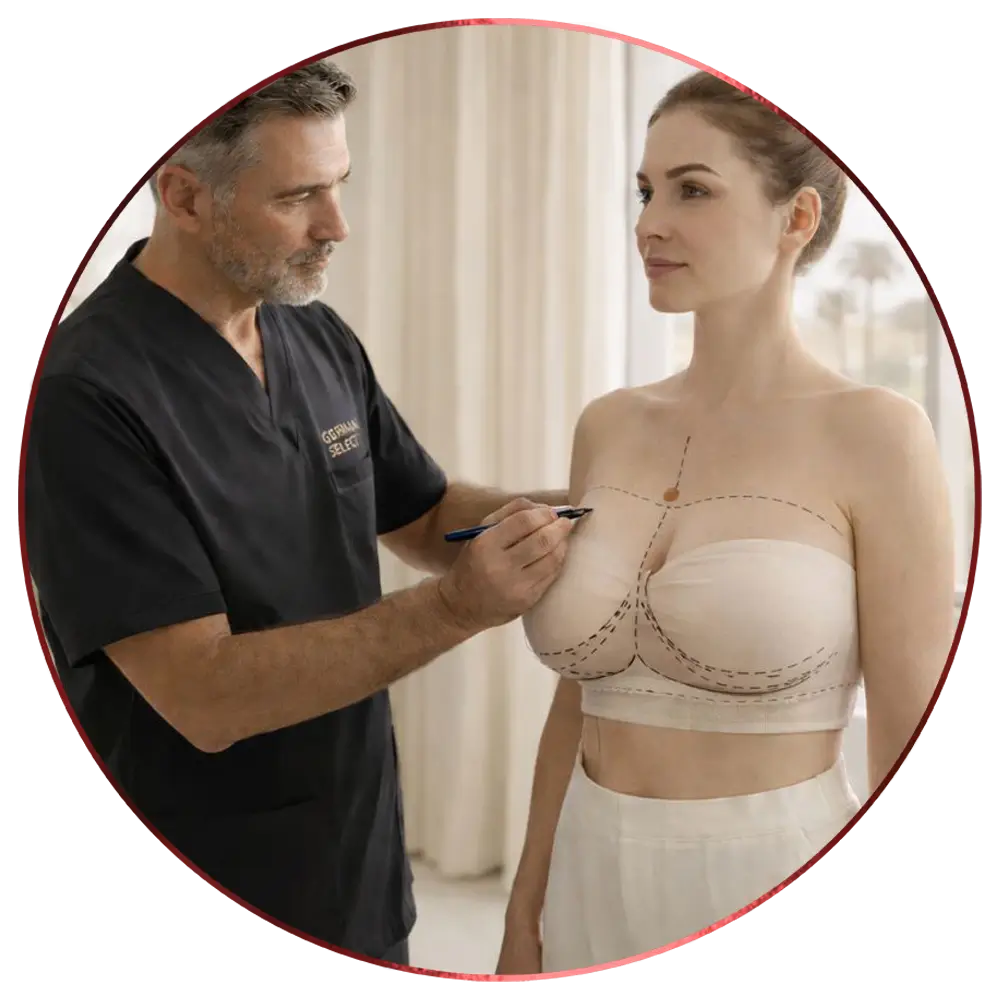
Removes excess breast tissue to relieve physical discomfort and restore proportion. One of the highest patient satisfaction rates in cosmetic surgery. European surgical standards, guided recovery in Hurghada.
2–4 hrs
Procedure
7-10 days
Stay in Hurghada
4-6 wks
Full recovery

When it becomes relevant
Disproportionately large breasts affect the body daily in ways that go far beyond appearance.
When size affects
daily comfort
Large breasts can cause chronic back, neck and shoulder pain, skin irritation under the breast fold, difficulty with physical activity and problems finding clothes that fit comfortably. These are structural concerns, not cosmetic ones.
Breast reduction is considered when size affects physical comfort, posture or daily quality of life in ways that cannot be managed through other means. It is one of the most functionally effective procedures in cosmetic surgery.
What it addresses
What breast reduction addresses
Breast augmentation increases or restores volume using carefully selected implants. The procedure is planned for your frame, not a standard size.
Physical discomfort and pain
Relieves chronic back, neck and shoulder pain caused by disproportionate breast weight. Most patients report significant improvement within weeks of recovery.
Skin irritation and hygiene
Addresses skin folds and irritation under the breast fold that develop with excess weight. Reduces friction and improves comfort during daily activity.
Proportion and symmetry
Reshapes and lifts the breast to restore proportion to your frame. The nipple position is corrected as part of the procedure.
Physical activity and posture
Improves ease during exercise and physical activity. Most patients report improved posture and greater freedom of movement after recovery.
How it is planned
How breast reduction
is planned and performed
Medical consultation
You share your symptoms, goals and medical history. Breast anatomy, tissue quality and degree of reduction are assessed. You receive a clear recommendation before any commitment.
Procedure day
Excess tissue, skin and fat are removed. The breast is reshaped and the nipple repositioned. Technique is selected to maintain shape, symmetry and sensitivity.
Recovery timeline
Most patients stay in Hurghada for 7–10 days. Light activity within 2 weeks. Full recovery at 4–6 weeks. Digital follow-up after you return home.
What is included
What's included in your
breast reduction program
Your treatment is coordinated from assessment to long-term follow-up.
Free eligibility screening and consult intake
Pre-operative screening guidance
Procedure coordination and on-site support
Recovery planning during your stay
One point of contact during your stay
Aftercare instructions and check-ins
Digital follow-up after you return home
Ready to explore your options
No commitment required. Your coordinator responds within 24 hours and can answer any questions before you decide.
Common questions
Questions patients ask
before making a
Am I a candidate?
Breast reduction suits adults experiencing physical discomfort from disproportionately large breasts. A stable weight is recommended. Suitability is confirmed during the free consultation.
How long is recovery?
Most patients return to light activity within 2 weeks. Full recovery takes 4–6 weeks. Most patients stay in Hurghada for 7–10 days.
Can breast reduction relieve back pain?
Yes. Relief from back, neck and shoulder pain is one of the most common outcomes. Many patients also report improved posture and greater ease during physical activity.
Will there be visible scars?
Breast reduction leaves scars around the areola and vertically down to the breast fold. Scars fade significantly over 12–18 months.
Can I breastfeed after breast reduction?
Breastfeeding may be possible but cannot be guaranteed. This depends on the technique used. Your surgeon discusses this during the consultation.
What does breast reduction cost in Egypt?
Pricing is confirmed during your free consultation. 50–65% less than comparable procedures in Germany or Belgium.
Ready to take
the first step?
A free consultation is all it takes to understand what breast reduction can realistically achieve for you.