7–10
Days in Hurghada
6–8
Weeks full recovery
50–65%
Lower cost than DE/BE
Cosmetic procedures — Body
Restore the abdominal wall,
not just the surface.
Abdominoplasty, structural correction with guided recovery
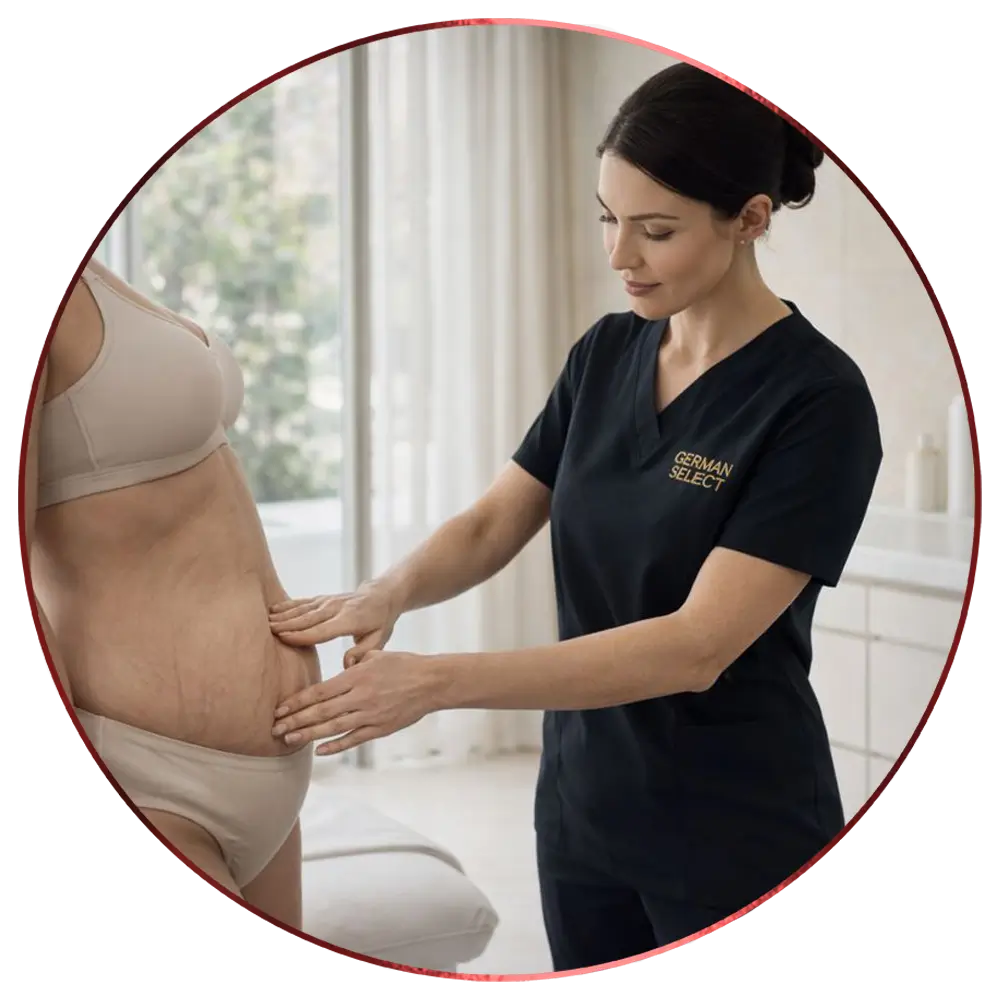
Abdominoplasty corrects excess skin and repairs separated abdominal muscles when the abdominal wall no longer provides adequate support. Treatment follows European clinical protocols, with surgery and recovery managed in Hurghada from a single point of contact.
The concern
When the abdominal wall
no longer recovers on its own.
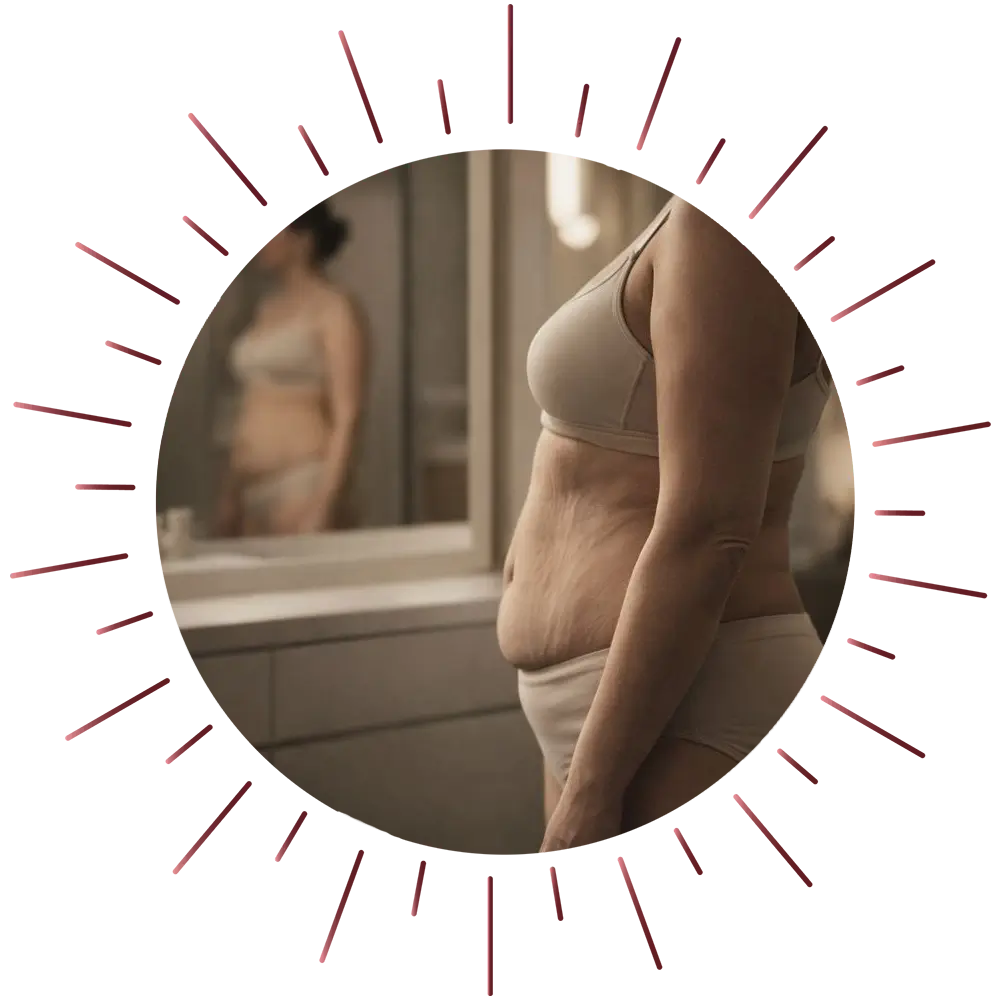
Pregnancy and significant weight changes can overstretch the abdominal skin beyond its ability to retract, and separate the underlying muscles. These changes are structural. They affect posture, core stability and how the body moves during daily activity, not only appearance.
Abdominoplasty becomes medically relevant when excess skin and muscle separation remain despite a stable weight and an active lifestyle. The procedure addresses the abdominal wall as a structural unit, skin, muscle and support, rather than treating it as a surface concern.
What it corrects
Structural correction,
not surface reshaping.
Abdominoplasty is planned around abdominal anatomy, skin quality and muscle condition, not a fixed technique applied to every patient. The combination below is confirmed during your medical evaluation.
Skin
Excess skin that cannot retract
Overstretched skin that has lost elasticity is removed along anatomical lines, restoring a flatter abdominal contour and reducing irritation under skin folds.
Muscle
Diastasis recti — muscle separation
If the abdominal muscles have separated along the midline, they are repaired and brought back together, restoring the structural support they provided before separation.
Support
Abdominal wall stability
Repairing skin and muscle together restores the abdominal wall's role in supporting posture, breathing mechanics and core engagement during movement.
Function
Posture and daily movement
Patients with significant muscle separation often report improved posture and reduced lower back strain once abdominal wall support is restored.
The procedure
How abdominoplasty
is planned and performed
01
Medical evaluation
Your medical history, pregnancy history, weight changes and recovery goals are reviewed. Skin quality, muscle separation and abdominal stability are assessed to confirm suitability.
02
Surgical correction
Excess skin is removed and weakened abdominal muscles are repaired where indicated. Incision placement follows anatomical lines to support healing and long-term function.
03
Guided recovery
Recovery is guided with clear timelines, physical support and medical monitoring in Hurghada. Healing continues after you return home, with planned digital follow-up.
What's included
Every plan starts with
a medical evaluation.
Your treatment is coordinated from first contact to follow-up care. You focus on healing. We manage eligibility, planning, surgical coordination and aftercare from a single point of contact.
Eligibility screening and medical consultation
Pre-operative preparation guidance
Surgical correction, skin removal and muscle repair where indicated
On-site surgical coordination and recovery support
Aftercare instructions and digital follow-up after you return home
One clear point of contact throughout your stay
Ready to explore your options
No commitment required. Your coordinator responds within 24 hours and can answer any questions before you decide.
Common questions
Questions patients ask
before deciding
Am I a candidate for abdominoplasty?
Abdominoplasty suits adults with excess abdominal skin or muscle separation that does not improve despite a stable weight and active lifestyle. It is most effective when weight is stable and there are no plans for further pregnancy.
Is muscle repair always required?
No. Muscle repair is only performed if diastasis recti, separation of the abdominal muscles, is present. This is assessed during the medical evaluation and confirmed before surgery.
Can abdominoplasty be combined with other procedures?
Yes. Liposuction is frequently combined with abdominoplasty to refine the waist and flanks. Your surgeon reviews your anatomy during consultation and confirms whether combination is appropriate for your case.
What does abdominoplasty correct?
Abdominoplasty corrects excess skin that cannot retract naturally, repairs separated or weakened abdominal muscles (diastasis recti), and restores structural support to the abdominal wall, improving posture and core function rather than only surface appearance.
Does abdominoplasty improve abdominal strength?
When muscle separation is repaired as part of the procedure, abdominoplasty restores core support and can improve posture and the function of the abdominal wall during daily movement.
How long is recovery after abdominoplasty?
Most patients return to light activity within 2–3 weeks. Full recovery takes 6–8 weeks. Most patients stay in Hurghada for 7–10 days as part of the structured recovery programme, with digital follow-up continuing after returning home.
Next step
A clear medical picture
before any decision.
Abdominoplasty is a corrective medical procedure that requires assessment, planning and guided recovery. A free consultation is the first step toward understanding what it can realistically achieve for you.