3–4
Months to new growth
1-2
Weeks aftercare
50–65%
Lower cost than DE/BE
Cosmetic Procedures — Hair
Beard transplantation
for balanced facial definition.
Controlled follicle placement, Hurghada, Egypt
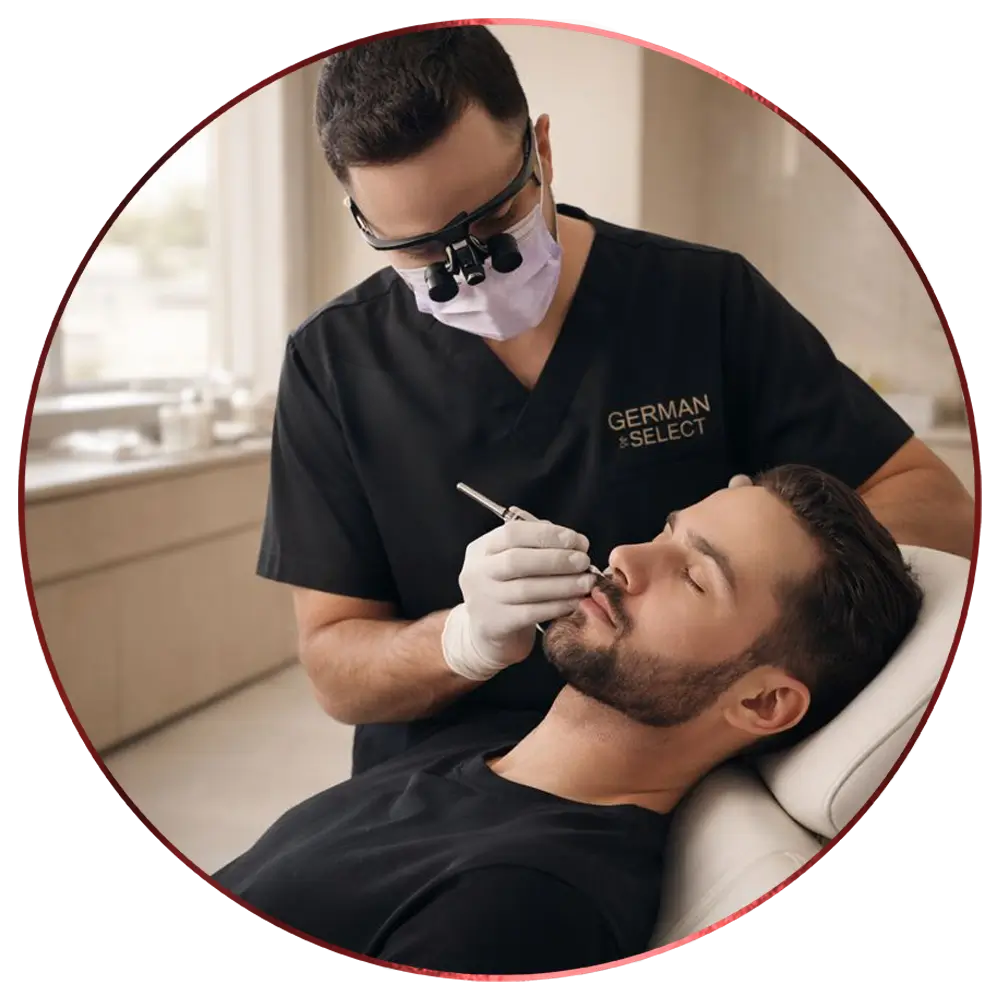
Beard transplantation restores facial hair growth by repositioning healthy follicles in areas where natural development is limited or absent. Treatment follows European medical protocols, with the procedure and recovery managed in Hurghada from a single point of contact.
The concern
When beard growth
remains irregular.
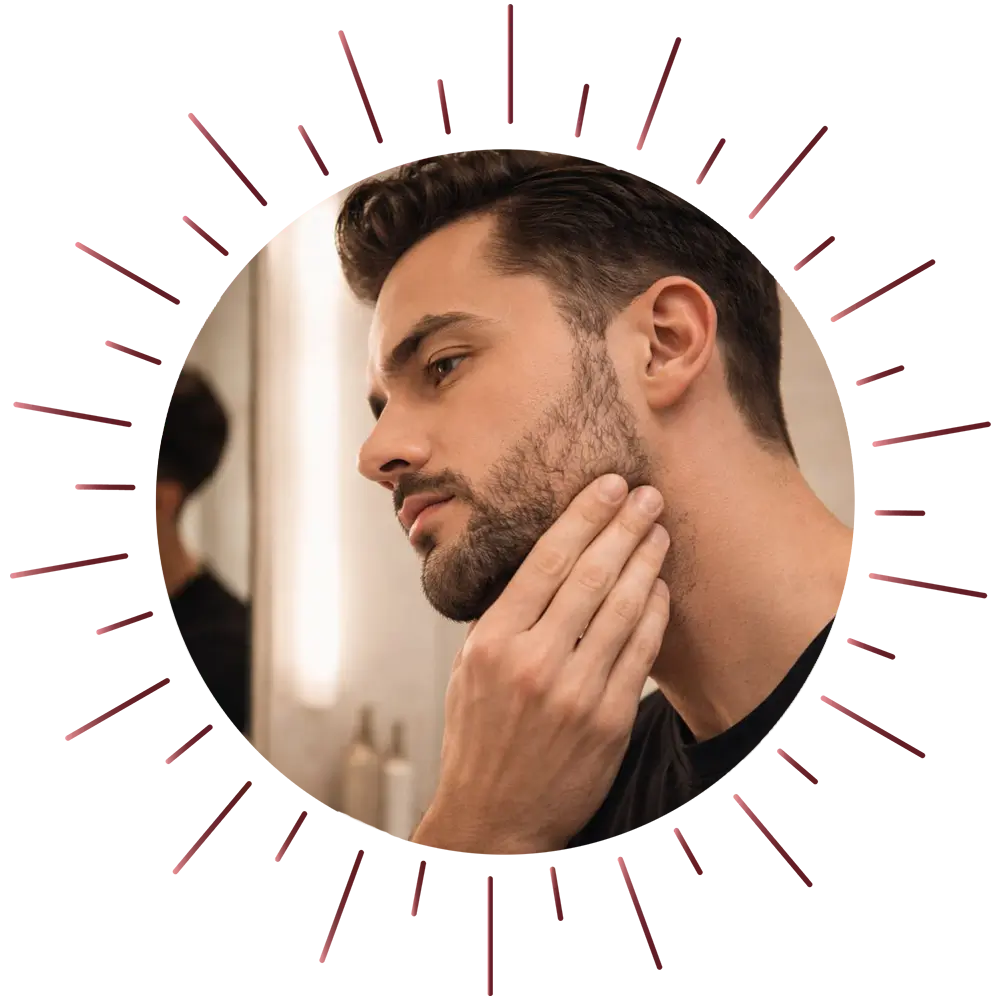
Facial hair development varies widely. Genetics, scarring, hormonal sensitivity or past inflammation can prevent uniform beard formation. In many cases, growth remains incomplete despite time or topical treatments.
Common concerns include asymmetry between cheeks, weak jawline definition, gaps in the mustache or complete absence of beard growth. These patterns often remain stable throughout adulthood. A beard transplant is considered when irregular growth affects facial balance or personal confidence. The goal is structural improvement, not trend-driven styling.
What it corrects
Restoring coverage where
growth is absent or inconsistent.
Beard transplantation restores coverage in areas where growth is absent or inconsistent. Each area requires a specific placement strategy to ensure natural blending with surrounding hair, confirmed during your medical assessment.
Cheeks
Patchy cheek growth
Uneven coverage across the cheeks is addressed by matching graft density and direction to the surrounding natural hair for a seamless transition.
Jawline
Uneven jawline density
A defined jawline depends on consistent density along its length. Grafts are placed to follow the natural angle and growth direction of the jaw.
Mustache
Gaps in the mustache
The mustache area has a distinct growth direction and density pattern, requiring precise placement to integrate naturally with existing hair.
Restoration
Loss from scarring or injury
Beard loss due to scarring, injury or congenital absence of facial hair is addressed by transplanting follicles into the affected area to restore coverage.
The procedure
How beard transplantation
is planned and performed.
01
Medical evaluation
Your facial structure, beard pattern and medical history are reviewed. This defines a medically responsible treatment plan.
02
Follicle harvesting
Follicles are extracted from the donor area under controlled conditions. Only grafts with suitable thickness and growth characteristics are selected.
03
Guided placement
Grafts are placed according to natural beard direction, density gradients and facial proportions. Precision placement is finalised before implantation begins.
What's included
Your complete
beard transplantation program.
Your beard restoration is coordinated from first consultation to long-term follow-up. Every plan begins with a detailed medical assessment: facial anatomy, donor hair quality, skin characteristics and growth direction are evaluated before any recommendation is made. Planning focuses on facial symmetry and durability; immediate fullness is never prioritised over sustainable results.
Medical eligibility screening
Facial mapping and graft planning
Controlled follicle extraction and placement
Post-procedure care during your stay
Recovery guidance after return home
One point of contact throughout your journey
Ready to explore your options
No commitment required. Your coordinator responds within 24 hours and can answer any questions before you decide.
Questions
What patients
commonly ask.
Am I a candidate for a beard transplant?
A beard transplant is considered when irregular or absent facial hair growth affects facial balance or personal confidence, and donor hair from the scalp is of suitable quality. A medical assessment evaluates facial anatomy, donor hair quality and growth direction to confirm suitability.
When will beard hair start growing?
Transplanted hairs typically shed within the first few weeks, this is expected and normal. New growth begins around 3–4 months after the procedure, with density continuing to fill in over the following months.
Are results permanent?
Transplanted follicles generally remain stable long-term. Planning accounts for how facial hair evolves over time, so the result is designed around durability rather than short-term density alone.
Is a beard transplant a permanent solution?
Transplanted beard follicles generally continue producing hair long-term once established. Planning focuses on facial symmetry and durability, so results remain natural as facial hair patterns continue to develop over time.
How long does recovery take?
Most patients return to normal daily activity within a few days. The donor and recipient areas require gentle aftercare for the first 1–2 weeks, while visible results develop progressively over several months.
Can beard transplantation be combined with other treatments?
Yes. Beard transplantation can be planned alongside hair transplantation or other facial procedures where appropriate. Your specialist confirms suitable combinations during consultation, based on donor area availability.
Next step
A plan built around
your facial structure.
Beard transplantation begins with medical assessment and careful planning. A structured consultation defines whether transplantation is suitable and what outcome can be responsibly achieved.